
Why Governor Alia’s Security Remains Intact: Understanding Governance, Leadership, and Legacy in Benue State”
By
Fely Mammah
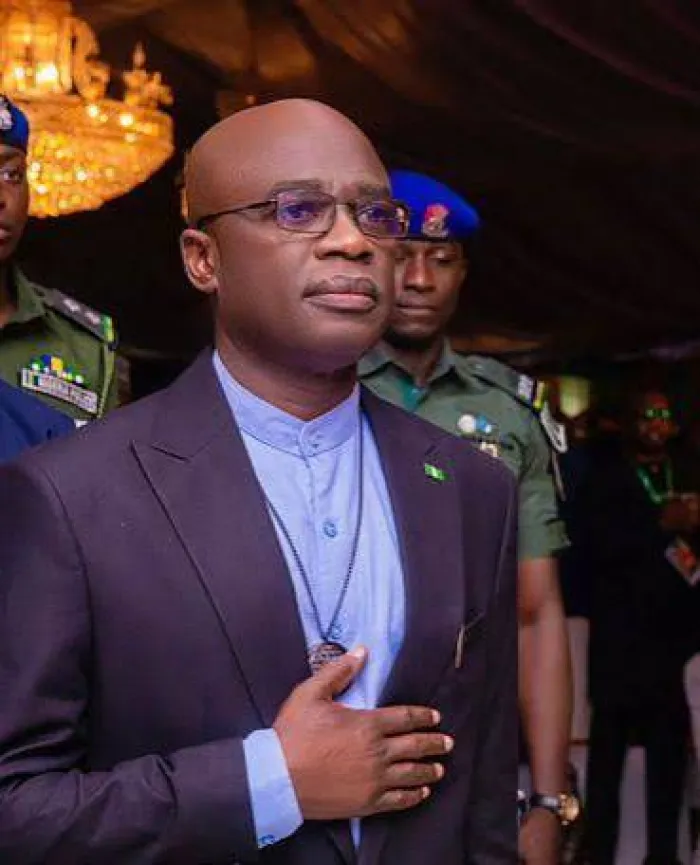
The Office of every sitting Governor is constitutionally entitled to full security coverage, a provision unaffected by the recent Presidential directive withdrawing police protection from VIPs without executive mandates. As the number-one citizen of Benue State, Governor Hycienth Alia rightfully receives fortified security, a necessity given the political pressures and opposition that naturally surround any state leader.
The Federal Government’s decision to recall police personnel from private individuals is part of its commitment to good governance and the nationwide call to reduce poverty by enhancing security presence in strategic locations. This policy does not apply to governors, whose security remains a constitutional imperative. Nigerians must therefore understand government policies and leadership structures to avoid misinterpretations that could derail good intentions or create unnecessary political tension.
Leadership demands divine grace and the support of citizens, and in Benue State, the man positioned to deliver with sincerity and surprising effectiveness is His Excellency, Rev. Fr. Hycienth Alia.
As Oliver Twist famously illustrated the complexity of human nature, many people—intellectuals included—sometimes allow personal desires or lack of self-discipline to obscure their priorities. Yet, times are changing, and leaders like Fr. Alia approach governance as a rare privilege to serve and restore what belongs to the people. His ideology values education as a tool to conquer illiteracy and create an environment comparable to advanced societies—achieved through professionalism, experience, determination, and sincerity.
Scriptural stories remind society to choose positivity over negativity. Benue people unanimously elected a spiritual leader guided by God’s commandments—someone whose teachings at the altar shaped many lives. Fr. Alia will be remembered as the man who challenged Nigeria’s colonial-style godfatherism, demonstrated unwavering courage, and boldly exposed the planned genocide against his people, attracting global intervention.
His achievements speak clearly: Fr. Alia made roads motorable, commissioned developmental projects, and became the first governor to build a flyover in the state, expanding dualisation routes that connect Benue to neighbouring states—all within two years. He attracted United Nations and World Bank projects, impressed first-time visitors to the state, and secured partnerships for further development.
Historically, he stands out as the governor who cleared all inherited debts, including civil service salary arrears, without borrowing recklessly or mismanaging public funds. His leadership rekindled hope in the youth, positioning him as their role model and a symbol of achievable success. His cabinet of young, vibrant administrators reflects his progressive vision—one comparable to leaders like Burkina Faso’s President Ibrahim Traoré.
Despite Benue’s status as a non-oil-producing state, Governor Alia safeguards its agricultural wealth with the seriousness it deserves. Like Jethro advising Moses in Exodus 18:18, he recognises that leadership cannot be carried out alone and therefore welcomes capable individuals from all tribes to support his mission.
Some youths, driven by unrealistic expectations of instant material gain, were disappointed when they realized Fr. Alia was not the naïve leader they assumed he would be. He is deliberate, grounded, and guided by purpose. Every good landlord builds on solid foundations, and Governor Alia began his tenure by renovating dilapidated infrastructure before initiating new projects—understanding that governance is continuity.
Seeing that mismanagement and reckless spending had hindered Benue’s progress, he redrafted his vision into the emergence of a “New Benue State.” Today, Benue leads in the production of ginger, citrus, pears, cassava, garri, yams, and other exportable crops—positioning the state as a contributor to the nation’s GDP.
Governor Hycienth Alia will forever remain a reference point in Benue’s history—a pillar of strength and an example for successors to emulate.

Write a Comment