
Symptoms and Treatments of Fibroids
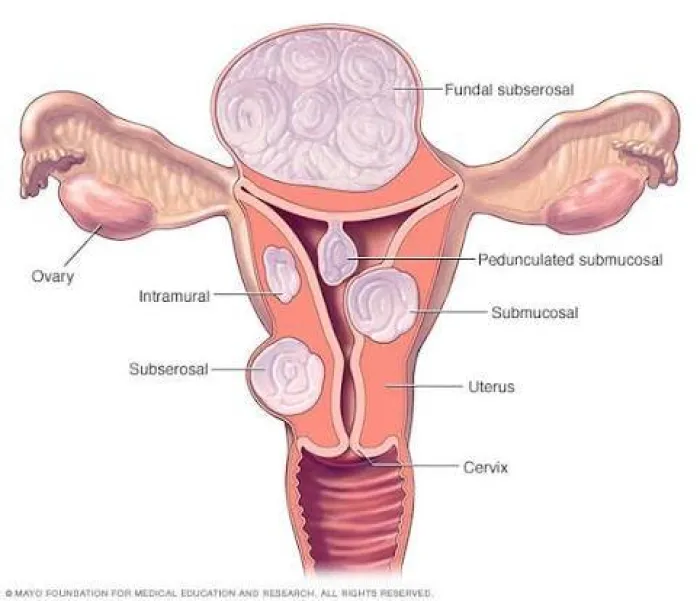
Fibroids can cause different symptoms depending on their size, number, and location in the uterus. Some women have no symptoms at all, while others experience significant discomfort.
1. Heavy or Prolonged Menstrual Bleeding
• Very heavy periods (sometimes leading to anemia)
• Periods lasting longer than 7 days
• Passing large blood clots
2. Pelvic Pain or Pressure
• Feeling of fullness or pressure in the lower abdomen
• Constant lower abdominal pain or cramping
3. Pain During Sex
• Especially if the fibroids are located near the cervix or lower part of the uterus
4. Frequent Urination
• Fibroids can press against the bladder, causing:
• Frequent urination
• Difficulty emptying the bladder completely
5. Constipation
• Pressure on the rectum may lead to bowel difficulties.
6. Back or Leg Pain
• Large fibroids may press on nerves, causing discomfort in the back or legs.
7. Reproductive Problems
• Difficulty getting pregnant
• Miscarriage
• Complications during pregnancy (depending on fibroid size and location)
8. Enlarged Abdomen
• Large fibroids can make the belly appear swollen, similar to early pregnancy.
⸻
Treatment of Fibroids
Treatment depends on symptoms, fibroid size, future pregnancy plans, and overall health. Options include medications, non-surgical procedures, and surgery.
A. Medical (Non-Surgical) Treatments
1. Pain Relievers
• Ibuprofen or acetaminophen can help reduce pain, but do not shrink fibroids.
2. Hormonal Medications
These help control symptoms but may not eliminate fibroids:
• Birth control pills: Reduce heavy bleeding.
• Hormonal IUDs: Control bleeding and pain.
• GnRH agonists (e.g., leuprolide): Temporarily shrink fibroids by lowering estrogen levels.
Often used before surgery.
3. Tranexamic Acid
• Taken during menstrual periods to reduce heavy bleeding.
4. Vitamin D Supplements
• May help slow fibroid growth (based on emerging studies).
B. Non-Surgical Procedures
1. Uterine Fibroid Embolization (UFE)
• A minimally invasive procedure that blocks blood flow to the fibroid, causing it to shrink.
• Short recovery time.
• Suitable for women who do not plan to get pregnant soon.
2. MRI-Guided Focused Ultrasound
• Uses high-intensity ultrasound waves to destroy fibroid tissue.
• No incision is required.
⸻
C. Surgical Treatments
1. Myomectomy (Fibroid Removal Surgery)
• Removes only the fibroids, leaving the uterus intact.
• Best option for women who still want to have children.
• Can be done through:
• Open surgery
• Laparoscopy
• Hysteroscopy (through the vagina)
2. Hysterectomy
• Complete removal of the uterus.
• The only permanent cure for fibroids.
• Recommended for women with severe symptoms who do not wish to get pregnant.

Write a Comment