
Governor Hyacinth Alia’s Second Year: A Defining Season of Trials, Faith, and Reform in Benue State
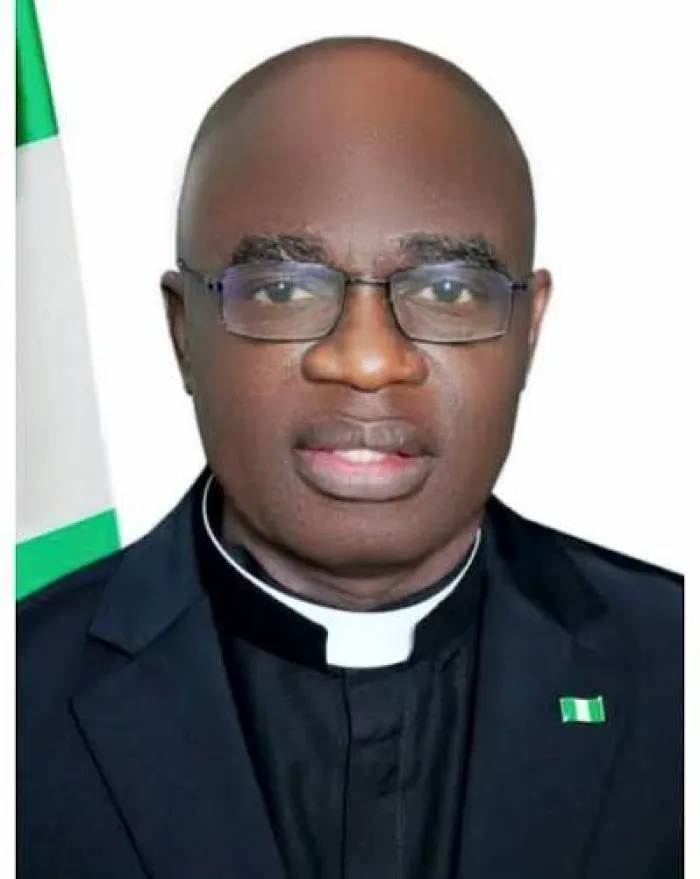
By
Fely Mammah
Abuja
The second year of Governor Hyacinth Alia’s administration in Benue State stands out as the most challenging and defining period of his leadership. It marked a profound test of his strength, preparedness, and divine calling to serve his people. The year 2025, in particular, put to trial the authenticity of his vocation—one shaped long before politics, from the altar to the grassroots. Nature itself seemed to affirm that before any man is called to public duty, he is first prepared. For Governor Alia, a priest-turned-politician, this preparation was both spiritual and practical.
That same year was also a painful period globally, remembered for immense loss of lives and grief across many families. Within this context of sorrow and uncertainty, Governor Alia’s resolve was tested as Benue faced insecurity, bloodshed, and humanitarian crises.
Governor Alia understood that his calling to lead his people from darkness to light transcended political gimmicks. His lone but courageous voice against the killings and herdsmen attacks drew national and international attention, compelling President Bola Ahmed Tinubu to witness firsthand the lamentations of the Benue people, while also attracting concern and intervention from world leaders during moments of apparent helplessness.
Like King David in the Scriptures, who cried to God while being pursued by King Saul, Governor Alia’s experience echoes the words of Psalm 61: “From the ends of the earth I cry to you; when my heart is overwhelmed, lead me to the rock that is higher than I.” In moments of deep distress, his faith became his refuge and strength.
Often described as a reforming and energetic governor, Alia governs with confidence rooted in the belief that God remains his shelter and strong tower against opposition. His life, discipline, and character—shaped by years in the seminary—his courage to speak truth, and his compassion for the oppressed, endeared him to Benue people. These qualities convinced many when Senator George Akume, Secretary to the Government of the Federation, presented him to the political elite as a candidate capable of sanitizing and reforming the state.
What played out in Governor Alia’s life during this period was his refusal to submit to the entrenched culture of godfatherism. Instead, he embraced the reality of his divine purpose, choosing to break barriers that limited the freedom and progress of his people. History shows that leadership is never easy for those who see responsibility as sacred. True greatness begins with humility, respect for all, kindness, the choice of competent support staff, and a commitment to collective governance.
The Scriptures remind leaders that while many are called, few are chosen. Governor Alia’s journey reflects this truth as he navigates opposition and betrayal, much like David did in Psalm 62, where adversaries blessed with their mouths but cursed inwardly. Yet, the governor maintains that his expectation is from God alone, not from man.
His emotional moments clarified his understanding of selfless leadership, rejecting politics driven by personal gain at the expense of the vulnerable. He insists that no negative force can deter him from serving the people of Benue faithfully. After his tenure, he believes he will still walk among them as one of their own. He continually exalts God as his rock, salvation, and defense, urging Benue people to trust in God, symbolized in the state’s logo, and to see Him as their ultimate refuge.
As citizens prepare to assess his performance, many recall the saying: “Tough times never last, but tough people do.” They commend Governor Alia for calming turbulent waters that once threatened to overwhelm the state. While mourning loved ones lost, they also found renewed hope through global solidarity, visits from NGOs, and delegations—including from the United States—to IDP camps, assuring them of a better tomorrow. Many displaced persons have since returned home, now working closely with the government to restore peace.
Despite enduring hardship alongside their governor, Benue citizens recognize that sustained support for his leadership remains crucial. They acknowledge strides in transportation through the Benue Links vehicles, employment of graduates into state ministries regardless of origin, and massive investments in healthcare—including the ₦18 billion health projects, the first cancer center in the Middle Belt, and the renovation of the Teaching Hospital. The signing of an MoU with a Chinese company to supply affordable drugs has further strengthened healthcare delivery. Civil servants commend the governor for clearing salary arrears, while plans for affordable intra-city metro buses promise improved mobility.
Today, many Benue citizens express readiness to unanimously re-elect Governor Alia for a second term, believing he remains committed to building a new and reformed Benue State. They affirm that visible projects—especially road construction and restoration of electricity—have exceeded expectations when compared to previous administrations. While urging him to remain focused, they dismiss opposition as distractions that only further highlight his achievements and areas needing attention.
“Behind Governor Alia, Benue citizens stand—for a second term,” they declare.

Write a Comment