
Why Worr? Nigerian Coaches Now Have Cause to Worry After the Exit of Coach Onigbinde

By
Coach Patrick Ngwaogu
If you were privileged to attend any of the lectures delivered by Adegboye Onigbinde, you would immediately understand why many regarded him as more than just a football coach. He was a philosopher of the game, a teacher, and a mentor to generations of Nigerian coaches. During his talks, he often shared vivid stories about the realities of coaching in Nigeria—stories that combined humor, resilience, and wisdom.
On many occasions, he would recount how he managed the then Nigeria national football team, then known as the Green Eagles, with extremely limited resources. According to him, there were times when the team trained with just one football and had no bus to transport players to and from training sessions. Yet, through ingenuity and determination, the team continued to function and compete.
He would usually end such stories with a phrase that became a trademark of his philosophy: “In every situation you find yourself as a coach in Nigeria, why worry? Worry for wetin?”
That simple but powerful statement reflected his belief that challenges were an inevitable part of Nigerian football, and that successful coaches must learn to improvise, adapt, and remain focused.
Today, however, many Nigerian coaches may find themselves reflecting deeply on that statement following the passing of the man who popularized it.
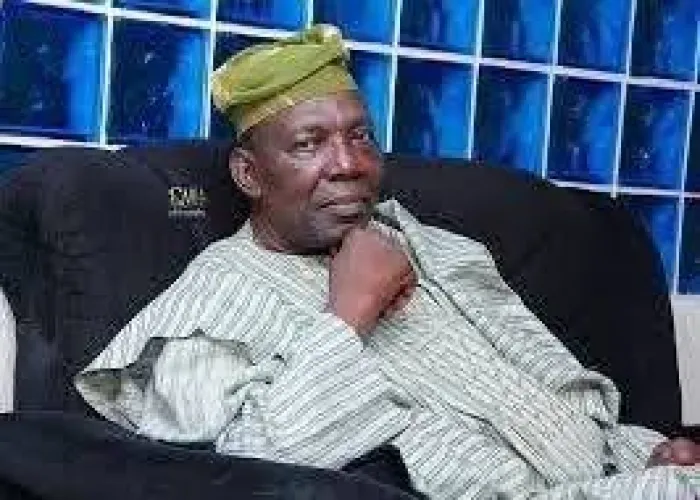
The story of Adegboye Onigbinde is one of resilience, vision, and an unwavering commitment to the development of football in Nigeria. Widely regarded as one of the most respected tacticians in the country’s football history, his journey from a young sports enthusiast to an internationally recognized coach mirrors the broader evolution of Nigerian football itself.
Over several decades, he dedicated his life to the game, leaving behind a legacy of innovation, mentorship, and leadership that shaped generations of players and coaches.
Chief Onigbinde was widely admired for his intellectual approach to football. At a time when many coaches relied largely on instinct and physical strength, he emphasized strategic planning, psychological preparation, and tactical discipline. To him, football was not just about talent but about structure, organization, and thoughtful preparation.
One of his most consistent and passionate beliefs was the importance of home-based players. He repeatedly argued that Nigeria’s domestic league was rich with talent and that locally based footballers deserved more opportunities in the national team setup. In his view, strengthening the local league was essential for the long-term growth of Nigerian football.
His emphasis on discipline and organization earned him both admiration and criticism. Some observers considered his methods strict or rigid, but many others respected his commitment to professionalism and structure in an environment that often lacked both.
Born on September 5, 1938, in Modakeke, Osun State, Onigbinde grew up during a period when organized football in Nigeria was still developing. Like many young boys of his generation, he was introduced to the game through community matches and school competitions. These early experiences helped nurture his understanding and love for football.
Unlike several of his contemporaries who pursued professional playing careers, Onigbinde gradually gravitated toward coaching and administration. He possessed a natural ability to analyze matches and devise strategies, qualities that would eventually define his career.
His educational background also influenced his philosophy. He strongly believed that footballers should be intellectually developed as well as physically gifted. Discipline, education, and character were central elements of his approach to sports development.
Onigbinde’s coaching career began in the 1960s when organized club football was gaining prominence across Nigeria. His first major breakthrough came with his involvement at Shooting Stars Sports Club of Ibadan, one of the most historic clubs in Nigerian football.
At Shooting Stars, he quickly established himself as a disciplined and tactically minded coach. At a time when Nigerian football often relied on individual brilliance, he stressed teamwork, organization, and strategic awareness. Although his ideas were sometimes viewed as unconventional, they produced positive results.
Under his leadership, Shooting Stars grew into one of the most formidable teams in Nigerian club football. His success with the club elevated his reputation nationwide and eventually opened the door to national team responsibilities.
His tactical insight soon earned him a role with the Nigerian national team, popularly known as the Super Eagles. Onigbinde gained widespread national recognition when he was appointed head coach in the early 1980s.
One of the most notable moments of his tenure came during the 1984 Africa Cup of Nations in Ivory Coast, where he guided Nigeria to the final of the tournament. Although the team eventually lost to Cameroon, their disciplined and organized performance drew widespread praise.
Many observers noted that Onigbinde had built a team capable of competing with the best sides in Africa, reinforcing his reputation as one of Nigeria’s finest tacticians.
Another defining moment in his career came when he was appointed head coach of Nigeria ahead of the 2002 FIFA World Cup in South Korea and Japan.
His appointment came at a turbulent time for Nigerian football, as the national team struggled with administrative challenges, internal disagreements, and uncertainty over squad selection.
True to his philosophy, Onigbinde made the bold decision to include several home-based players in the squad. Nigeria faced formidable opposition in the group stage, including the Argentina national football team, the England national football team, and the Sweden national football team.
Although the team did not progress beyond the group stage, many analysts later acknowledged the difficult circumstances surrounding the squad. His decision to promote domestic talent was widely recognized as an act of courage and conviction.
Beyond his coaching achievements, Onigbinde made enormous contributions to football development in Nigeria. He was a strong advocate for grassroots football, youth development, and improved coaching education.
He mentored numerous coaches and football administrators, many of whom regarded him as a father figure within the Nigerian football community. His residence in Ibadan often became a gathering point for discussions about tactics, football policy, and the future of the sport.
He also participated in seminars and workshops organized by the Nigeria Football Federation, where he shared insights drawn from decades of experience.
Onigbinde was equally outspoken about improving the structure of Nigerian football leagues and protecting the welfare of players and coaches. His opinions were often candid and sometimes critical of football administration, but they always reflected his deep commitment to the development of the game.
Known for his calm demeanor and thoughtful speech, Chief Onigbinde commanded immense respect across the football community. His traditional chieftaincy title reflected his status not only as a sports figure but also as a respected elder in society.
Former players frequently described him as more than a coach. To them, he was a teacher who instilled discipline, responsibility, and leadership both on and off the field.
Even in his later years, he remained active as a football elder and analyst, regularly commenting on national team performances and the direction of Nigerian football.
The passing of Chief Adegboye Onigbinde marked the end of an era. Tributes from players, administrators, journalists, and fans poured in, all recognizing him as a pioneer and visionary.
Ironically, the man who always told Nigerian coaches “Why worry?” may now have left them with a reason to reflect deeply about the future. His departure leaves a void not only in coaching but also in mentorship, wisdom, and leadership within Nigerian football.
Yet his legacy remains powerful. Through his philosophy, teachings, and lifelong dedication, Adegboye Onigbinde helped shape modern Nigerian football.
For many observers, he will forever be remembered as one of the architects of the game in Nigeria—a man whose passion for football went far beyond victories and defeats.
Adieu, Baba. Your lessons will endure.
(Patrick Ngwaogu is the Executive Director/Editor In Chief of Exclusive News Newspaper and one of Coach Adegboye Onigbinde's numerous students)

Write a Comment