
ODOGWU IN BOX 18: Why Would the National Sports Commission Chairman Want to Be the Nigeria Football Federation President?
The first tenure of the present board of the Nigeria Football Federation (NFF) will elapse on Wednesday, 30 September 2026. By then, the executive committee led by Ibrahim Gusau would have completed its initial four-year mandate, having been elected on the same date in 2022.
That election, held in Benin City, produced a surprise outcome. Gusau, then the “Chairman of Chairmen,” emerged victorious ahead of two high-profile contenders — Shehu Dikko and Seyi Akinwunmi, both former NFF Vice Presidents. Few had tipped Gusau to win, but fate and political permutations swung in his favour.
With the 2026 elections fast approaching, the NFF electoral window will soon open. Behind-the-scene consultations and strategic meetings are reportedly underway. The incumbents are believed to be fine-tuning their strategy, aiming to return unopposed — or at least without significant turbulence — and possibly enter the record books as only the second NFF president to secure re-election.
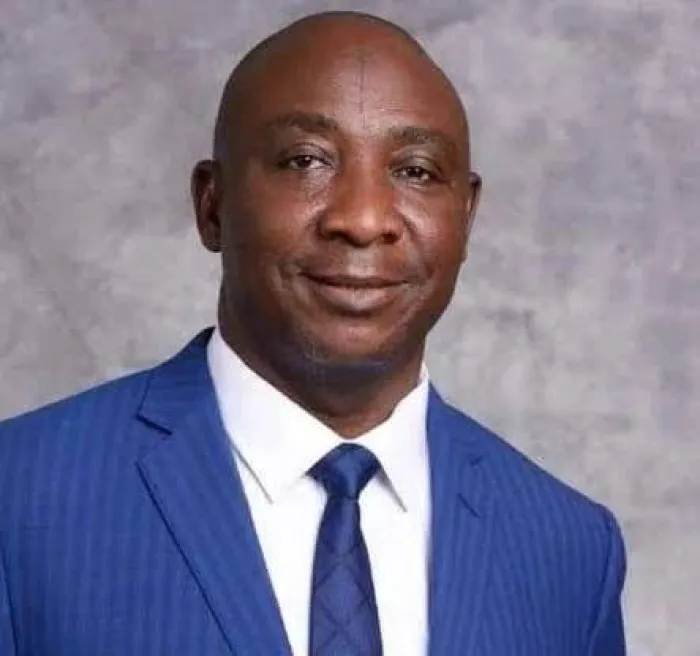
However, feelers from unconfirmed sources suggest that the current Chairman of the National Sports Commission (NSC), Mallam Shehu Dikko, may be considering another run at the NFF presidency — an ambition that eluded him in Warri in 2014 and again in Benin in 2022.
In Nigerian sports administration, few offices command as much influence and visibility as the NFF presidency. Similarly, the role of NSC Chairman has become increasingly strategic as the federal government seeks to reposition sports as a driver of economic growth and national development.
The question therefore arises: why would a sitting NSC Chairman aspire to head the NFF?
The answer may lie at the intersection of personal ambition, structural influence in Nigerian football, and a broader vision for sports governance. Around the world, there are precedents where football federation presidents simultaneously occupy high-ranking government positions. For instance, Fouzi Lekjaa has served as President of the Royal Moroccan Football Federation since 2014 while also holding the position of Minister Delegate for Budget in Morocco. Similarly, Ahmad Ahmad was President of the Malagasy Football Federation before serving in ministerial and legislative roles in Madagascar. His political and football influence culminated in his successful challenge against long-serving CAF President Issa Hayatou in 2017.
For the avoidance of doubt, Dikko is no stranger to football administration. Prior to the restructuring of the sports ministry into the NSC in October 2024, he was deeply embedded in Nigeria’s football ecosystem. He served as Chairman of the League Management Company (LMC), which oversaw the Nigeria Professional Football League, and as Second Vice President of the NFF.
His trajectory reflects years of administrative involvement at multiple levels. Before the 2014 NFF elections, which Dikko had been widely regarded as a strong contender, yet political manoeuvrings saw him pushed aside at one point in favour of former NFF President Amaju Pinnick. When he eventually contested, he failed to secure substantial delegate support. Many voters were reportedly disenchanted with the preceding administration and sought a complete overhaul. Critics also questioned aspects of his stewardship of the domestic league during his tenure at the LMC.
Football remains Nigeria’s most popular sport, commanding unmatched emotional investment across the country. The NFF presidency is therefore one of the most powerful roles in the nation’s sports governance structure. The office oversees the domestic league framework, national teams, grassroots development, and relationships with continental and global bodies such as CAF and FIFA.
Combining that responsibility with the demanding portfolio of the NSC Chairman would be a delicate balancing act — and perhaps, some argue, an impractical one. Moreover, the NFF statutes grant significant electoral influence to State Football Association chairmen, making the pathway to victory a complex political undertaking.
For Dikko, however, a renewed bid for the NFF presidency may not represent a sudden ambition but rather a continuation of a long-standing aspiration to shape Nigerian football at its highest level. He should remember that the cane that was used for the wife yesterday, is still hang somewhere for her tomorrow and the Pharaohs of yesteryears may still very much around, which may make his emergence another mirage. Though, his current role at the NSC arguably places him in a vantage position to understand the broader sports ecosystem and align football development with President Bola Tinubu’s Renewed Hope Agenda for sports, but all that glitters can never be gold.
Whether such dual ambition is strategic foresight or political overreach remains to be seen. What is certain is that as 2026 NFF election approaches, the contest for the soul of Nigerian football administration is already quietly underway.


Write a Comment