
ODOGWU IN BOX 18: 2026 World Cup Exit : End of an Era?

The Super Eagles’ failure to qualify for the 2026 World Cup in the USA, Mexico, and Canada is not the most painful part of the disappointment. What truly pricks the mind is the realization that an entire generation of Nigeria’s finest talents may never feature at football’s biggest stage again. Not because they lack quality, but because age is no longer on their side. Looking ahead to 2030, many of the current stars will struggle to remain at the level required for another World Cup cycle.
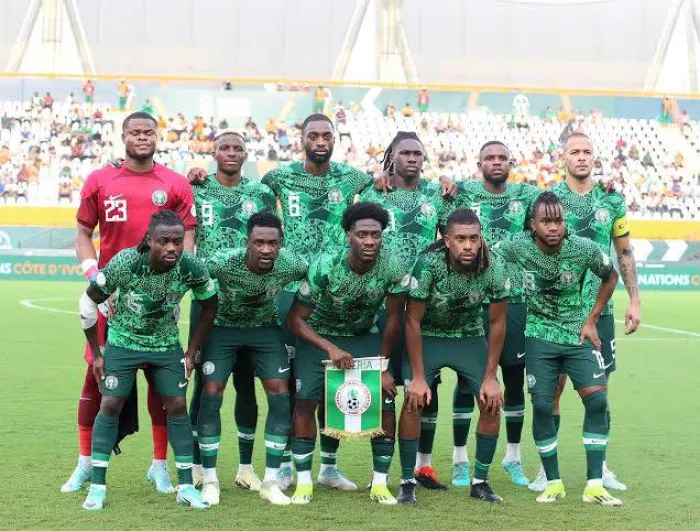
A quick look at the ages of the players who featured in the World Cup playoffs in Morocco confirms that this is indeed the end of an era—an era in which Nigeria produced back-to-back African Footballer of the Year winners in 2023 and 2024.
Among the goalkeepers, Stanley Nwabali (born 1996) will be 34 in 2030, Amas Obasogie and Maduka Okoye (both born 1999) will be 31. Goalkeepers age gracefully, but active competition at that stage is never guaranteed.
In defence, William Troost-Ekong will be 37, Semi Ajayi 37, Chidozie Awaziem 33, Bright Osayi-Samuel and Zaidu Sanusi 32, Bruno Onyemaechi 31, and Calvin Bassey 30. Only Benjamin Fredrick, who will be 25, fits the profile of a long-term option.
The midfield paints a similar picture. Alex Iwobi will be 34 in 2030, Wilfred Ndidi 32, Frank Onyeka 32, Alhassan Yusuf 30, and Raphael Onyedika 29. Realistically, only one or two may remain relevant at the top level by the next World Cup.
In attack, reigning African Player of the Year Ademola Lookman will be 33 by 2030, Victor Osimhen 32, Samuel Chukwueze 31, Chidera Ejuke 32, Tolu Arokodare 29, Akor Adams 30, and Moses Simon 35. Given the pace and intensity required of modern forwards, many of these players may have passed their peak.
Of the current group, only four—Troost-Ekong, Awaziem, Ndidi and Iwobi—featured at the 2018 World Cup in Russia, showing how quickly cycles end in football.
Nigeria’s exit from the 2026 qualifiers places enormous responsibility on the Nigeria Football Federation (NFF). After missing the World Cup for two consecutive editions, the federation must now oversee a full-scale rebuild. This begins with a thorough technical review: examining coaching efficiency, tactical shortcomings, player selection, and the team’s overall preparation. Reassessing the coaching crew—and possibly making fresh appointments—may be required to restore direction.
Equally crucial is strengthening youth development. A sustainable talent pipeline must be created through grassroots investment and improved support for domestic clubs. The Super Eagles cannot rely on last-minute solutions any longer.
Restoring unity, discipline, and commitment within the team is non-negotiable. Future call-ups must reflect hunger, professionalism, and long-term national team value.
With AFCON 2025 fast approaching, the NFF’s next steps will define the Super Eagles’ identity for years to come and determine whether Nigeria can reignite belief and return to the world stage stronger than ever.

Comments (1)
ORJI VICTOR ONYEANWUNA