
NIS Is the Fulcrum of Nigeria’s Sports Productivity – Philip Shaibu
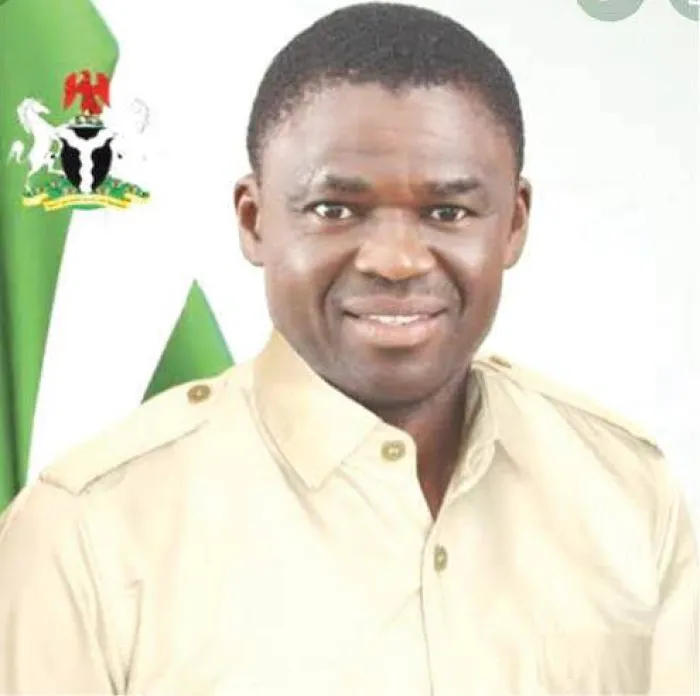
The Director General and Chief Executive Officer of the National Institute for Sports (NIS), H.E. Comrade Philip Shaibu, has described the institute as the central pillar upon which Nigeria’s sports productivity depends.
Shaibu made the statement during an interview on Channels Television on Monday, where he attributed the long-standing challenges facing the NIS to flawed budgetary systems and years of mismanagement by past leadership in the sports sector.
According to him, Nigerian sports has failed to reach its full potential because the NIS was pushed to the background due to sharp practices and systemic neglect.
“Under President Bola Ahmed Tinubu’s administration, funding for sports has been the highest it has ever been. The last budget is the highest the sports sector has received,” Shaibu said. “However, NIS was not captured in that funding, and it has been like that for decades.”
He further called for accountability, stating that former Ministers of Sports should be summoned by the National Assembly to explain their roles in what he described as the destruction of the institute.
“I remember calling for all former ministers of sports to be summoned by the National Assembly to account for their role in the destruction of NIS,” he said.
Shaibu, a former Deputy Governor of Edo State, also clarified lingering confusion surrounding the status and independence of the NIS from the National Sports Commission (NSC). He explained that while the institute was formerly under the defunct Ministry of Sports, it is now an independent parastatal, separate from the NSC.
He blamed the confusion on the incomplete transition from the former ministry structure to the current commission system.
“When the Ministry of Sports existed, the Commission, NIS, and NFF were parastatals under the ministry. I was one of those who agitated for the dissolution of the sports ministry in favour of the National Sports Commission,” Shaibu said.
“Now, we have the NSC, the NIS, and the NFF, and all three agencies are directly under the Presidency. Unfortunately, the transition from the ministry to the commission has not been fully implemented, and the old system is still in operation.”
He stressed that each body now operates independently with separate budgets, noting that approvals for the NIS budget end with the Director General, while those of the NSC and the Nigeria Football Federation (NFF) end with their respective heads.
“For the first time, the President is directly appointing the chairman of the commission and the DG/CEO of the NIS,” he added.
On transparency and fund management, Shaibu assured Nigerians that integrity would define his leadership at the institute. He revealed plans to adopt a public-private partnership (PPP) model similar to what he implemented during his tenure as Deputy Governor of Edo State.
“I am bringing my integrity to the table, which was tested in Edo State. We rebuilt infrastructure and brought in the private sector to help drive development. They were part of our boards and programmes,” he said.
He also referenced his role as chairman of the Edo 2020 National Sports Festival Local Organising Committee, highlighting what he described as an unprecedented level of financial accountability.
“I was the first LOC chairman after a sports festival to return over ₦500 million to the government. We conducted both internal and external audits, which were submitted to the then Minister of Sports, Sunday Dare. That was the first of its kind,” Shaibu stated.
He expressed confidence that similar measures would restore credibility, attract private sector investment, and reposition the National Institute for Sports as a cornerstone of Nigeria’s sporting development.
Write a Comment