
Is Retired Col. Sam Ahmedu the Problem of Nigerian Basketball?
By
Chinedum Ohanusi
For decades, basketball stood as one of Nigeria’s most vibrant sports, offering visible growth, global exposure, and genuine opportunities for young men and women.
Many Nigerians who today enjoy successful careers and stable livelihoods, trace their journeys to a basketball system that once worked—producing talents who featured in the NBA and other international competitions.
However, that once-smooth pathway appears broken, and stakeholders have increasingly complained that the road basketball paved for many has been blocked by entrenched interests, by individuals who have been accused of selfishness, self-preservation, and resistance to change.
These have led to a recurring and divisive question within the basketball community: who is really responsible for the stagnation of Nigerian basketball?
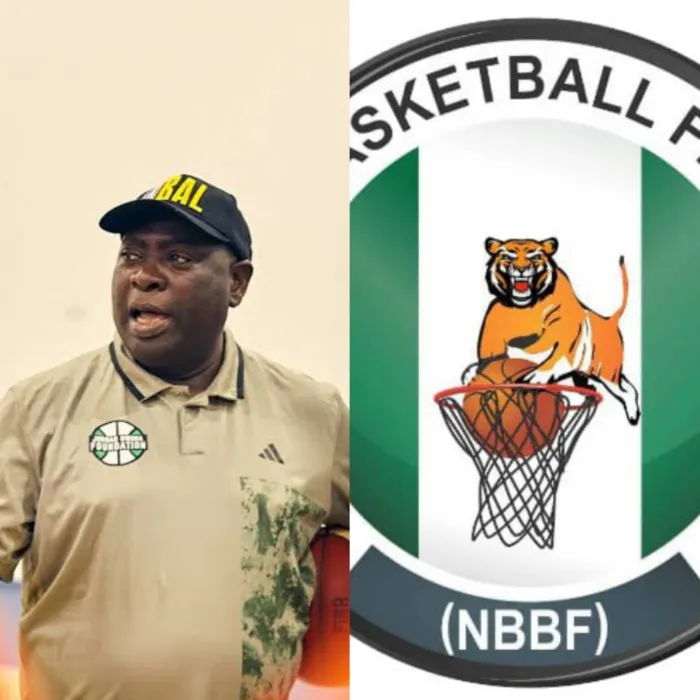
At the centre of this debate is Retired Colonel Sam Ahmedu, a long-standing figure in Nigerian and African basketball administration.
A simple search, showed that, during the military era in Nigeria, the Benue-born Army man, supported NBBF leadership which had retired Comptroller of Customs, Gyang Buba at the helm from 2005-2007, only for their relationship to later grow sour.
It was alleged that he later supported the coming to power of another former NBBF President Tijani Umar, only to also fall out with him.
Rets. Col. Ahmadu similarly backed the current NBBF President Engr. Musa Kida, but disagreements soon emerged, after Kida won the controversial January 31, 2022 elections in Benin City.
Things got bad between him and Kida, because of his seeming vested interests, and things didn’t still go his way. He is believed to have a hand and contriving the NBBF Constitution, to favor his disposition, while he was supporting Kida.
Now, the feelers have it that he is lining up another candidate, Olumide Oyedeji, a former captain of D'Tigers of Nigeria, and current owner of Dolphins Basketball Club and owner of Hoop and Read
To some stakeholders, this history suggests a cycle of influence, fallout, and continued dominance, by a single individual, hence the need for a clear break.
Also, Ahmedu’s position as a former FIBA Africa Zone III President has placed him permanently within the NBBF leadership structure, effectively making him a life member of the NBBF board.
However the question is what is the tangible impact of his leadership of FIBA Africa Zone 3, on the growth of basketball in Nigeria; and despite his status, as one of the most influential figures in the sport for over a decade.
It was equally gathered that his closeness to power has made him a perpetual power broker, limiting the space for alternative ideas and opposing voices to flourish.
Supporters of this view believe the problem of Nigerian basketball cannot be reduced to election graphics, or simple rival camps. Rather, they say it reflects deeper structural issues—longstanding leadership dominance, recycling of the same actors, and a system that resists renewal.
Retired Col. Sam Ahmedu strongly rejects these accusations, though.
Reacting to the claims, he described the allegations as the work of misinformed and mischievous persons, insisting that the narrative being pushed does not align with documented facts.
According to him, relevance is proven by participation and acceptance, not by propaganda.
“If I am not relevant, why would people vote for me or listen to me?” he asked.
Ahmedu clarified that since 1997, he has never sought to run for the NBBF Presidency, neither has he contested as a Zonal Representative.
He also poured cold water on claims that he brought Tijani Umar to power, insisting that he actually withdrew from the NBBF in 2009 when Umar became President.
He also explained that in 2013, he was schemed out of the system precisely because he supported Engr. Musa Kida’s Presidential ambition. But he admitted to pushing for Kida again in 2017 and said his own return to the NBBF board that year, followed clear Ministry of Sports guidelines, which allowed members of international federations to serve.
His reappointment in 2022, he added, was in line with the NBBF Constitution, which recognises him as the most senior member of an international basketball body.
“I have not taken anyone’s rightful place,” Ahmedu maintained. “If I were not relevant, nobody would follow me. Those pushing this narrative cannot show their own relevance to basketball.”
The issue, therefore, remains unresolved. Is Retired Col. Sam Ahmedu a stabilising force whose experience continues to benefit Nigerian basketball, or a symbol of an old order that has outlived its usefulness? What is clear is that Nigerian basketball stands at a crossroads—caught between its glorious past and an uncertain future—while stakeholders continue to search for accountability, renewal, and a sustainable path forward.
Write a Comment