
How U.S. Conduct Airstrikes Against Islamic State Militants in Nigeria; Trump Labels Targets “Terrorist Scum”
By
Christopher Clinton
In a major escalation of international counter-terrorism efforts, the United States carried out precision airstrikes against Islamic State (ISIS)-linked militants in northwest Nigeria over the Christmas holiday, a move that U.S. President Donald J. Trump described as a powerful strike against “terrorist scum.”
According to official statements from both U.S. and Nigerian authorities, the airstrikes took place on December 25, 2025, targeting militant camps and fighters believed to be planning large-scale attacks in the region. The strikes were conducted in Sokoto State, a largely rural area along the border with the Sahel, where extremist networks have increasingly sought to establish bases.
• Target: ISIS-linked militant camps, particularly fighters associated with the Lakurawa faction, a group linked to broader Islamic State Sahel Province networks.
• Weapons and Platforms: Precision-guided munitions — including **16 GPS-guided missiles fired from U.S. MQ-9 Reaper drones and Tomahawk cruise missiles launched from maritime platforms in the Gulf of Guinea — were used.
• Timing: The operation reportedly took place in the early hours of December 26 local time (late Christmas Day in the U.S.).
Nigeria’s Federal Government and Foreign Ministry confirmed the joint nature of the operation, emphasizing that the strikes were carried out in coordination with Nigerian authorities, including intelligence sharing and strategic planning. President Bola Ahmed Tinubu’s government authorised the operation, which federal officials described as part of ongoing efforts to disrupt militant networks.
President Trump took to his Truth Social platform to announce the operation, calling it a “powerful and deadly strike against ISIS Terrorist Scum in Northwest Nigeria” and claiming the militants had been “targeting and viciously killing, primarily, innocent Christians.” He added that he had previously warned extremist groups that “there would be hell to pay” if violence against Christians did not stop.
U.S. officials also indicated that the strikes were conducted at the direction of the U.S. Commander-in-Chief and with support from U.S. Africa Command (AFRICOM), which is responsible for American military operations on the continent.
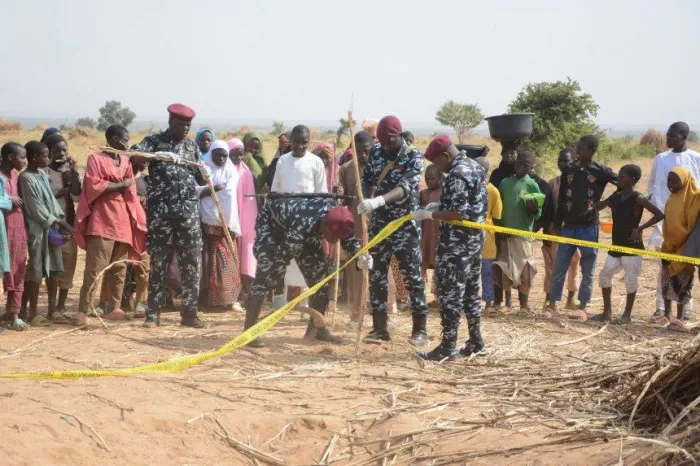
Early assessments from Nigerian authorities reported no confirmed civilian casualties, despite debris from some expended munitions landing in nearby communities such as Jabo in Sokoto State and Offa in Kwara State. Local residents described loud explosions, ground shaking, and a red glow in the sky, causing fear and confusion among villagers.
Both U.S. and Nigerian officials have not released precise casualty figures for militant fighters, though U.S. and Reuters reporting noted “multiple ISIS militants were killed”.
The Nigerian Foreign Minister, Yusuf Tuggar, stressed that the operation was part of a broader bilateral security cooperation, warning that further coordinated actions could be possible as part of sustained counter-terrorism efforts.
The airstrikes come amid ongoing security challenges in Nigeria, where multiple armed groups — including Boko Haram, ISIS affiliates, and local bandit networks — have contributed to widespread violence and displacement across the country. Experts note that while the strikes may degrade specific extremist capabilities, they do not address the deeper causes of insecurity, and analysts have cautioned that such military actions could fuel further tensions if not paired with comprehensive strategies.
International and local reactions have been mixed. Some Nigerian leaders welcomed the support, while others expressed concern about the implications of foreign military actions on Nigerian soil. Human rights advocates and analysts have also called for careful monitoring to avoid civilian harm and to ensure transparency around the objectives and outcomes of such operations.

Write a Comment