
How the New Pope Was Chosen—and Why Most Nigerian Cardinals Can’t Vote
By
Patrick Ngwaogu
The process involved in electing American Cardinal Robert Prevost as Pope Leone XIV began on Wednesday, May 7, 2025, following the passing of Pope Francis on Easter Monday. This sacred and secretive event, known as the papal conclave, was held behind closed doors at the Vatican as Catholic cardinals gather to choose the 267th leader of the global Catholic Church.
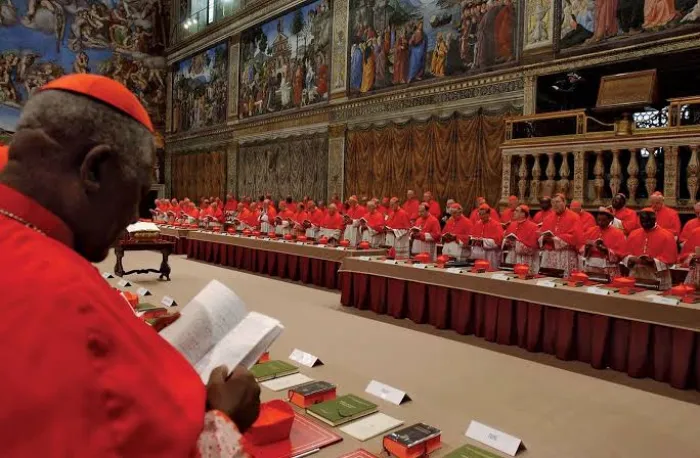
In preparation, cardinals have been holding two days of closed-door meetings to discuss the future direction of the Church. Now, the focus turns to the Sistine Chapel, where 133 cardinal electors—those under the age of 80—will cast their votes. These cardinals represent 71 countries and carry the weighty responsibility of selecting a leader for the Church’s 1.4 billion followers. Notably, 80% of them were appointed by Pope Francis himself.
Among the four Nigerian cardinals, only one—Cardinal Peter Okpaleke, Bishop of Ekwulobia—is eligible to vote. Appointed a cardinal by Pope Francis in 2022, he will be Nigeria’s sole representative in this historic conclave. The other Nigerian cardinals—Francis Arinze (92), Anthony Olubunmi Okogie (88), and John Onaiyekan (81)—are ineligible due to age.
Countries with the most voting cardinals include Italy (17), the United States (10), Brazil (7), and France and Spain (5 each). Other countries such as Argentina, Canada, India, Poland, and Portugal each have four eligible cardinals.
The conclave, from the Latin “cum clave” meaning “with a key,” is steeped in tradition. Cardinals are sealed inside the Sistine Chapel without access to phones, internet, television, or newspapers, ensuring that no external influence can sway the decision. They reside at Saint Martha House inside the Vatican, a residence introduced in the 1990s to improve conditions from the cramped Apostolic Palace used in earlier conclaves.
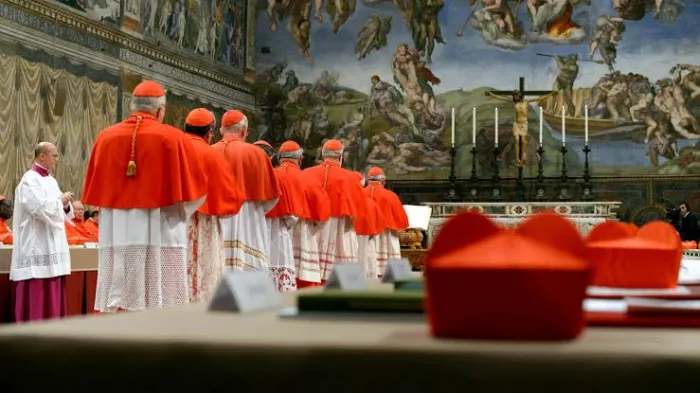
Each day, up to four voting sessions are held. Cardinals cast their ballots before Michelangelo’s fresco of the Last Judgment, placing their votes into a chalice. The ballots are counted aloud by three designated cardinals. If no candidate receives a two-thirds majority, the ballots are burned with chemicals to produce black smoke—a visible signal to the outside world that a pope has not yet been elected.
Once a cardinal secures the required majority, the Dean of the College of Cardinals asks if he accepts the papacy. If he agrees, he selects a papal name, dresses in the traditional white vestments, and prepares to greet the world.
White smoke from the chapel chimney announces the successful election. The senior cardinal deacon—currently French Cardinal Dominique Mamberti—then steps out onto the balcony of St. Peter’s Basilica to proclaim the famous words, “Habemus Papam” (“We have a pope”), followed by the first appearance and blessing from the new pontiff.
Cardinal Peter Okpaleke’s role in this process is significant. Born in 1963 in Amesi, Anambra State, he studied at Bigard Memorial Major Seminary and was ordained in 1990. His journey to becoming a bishop was not without controversy, particularly regarding his appointment to Ahiara, but he was later installed as Bishop of Ekwulobia and now serves as Chairman of the Canon Law Commission of the Catholic Bishops Conference of Nigeria (CBCN).
Though any baptized male Catholic can, in theory, be elected pope, in practice, only members of the College of Cardinals are considered. There is no formal list of candidates. Instead, each cardinal writes a name on a ballot beginning with the Latin phrase, “Eligo in summum pontificem…” (“I elect as Supreme Pontiff…”). They are even encouraged to disguise their handwriting for confidentiality.
If a pope is not elected after three days, there is a brief pause for prayer and informal discussion, as directed by Pope John Paul II in his 1996 document Universi Dominici Gregis.
Despite the complex process, modern conclaves usually conclude within a week. Once the decision is made, history turns a page—as the bells ring, white smoke rises, and the world meets its new spiritual leader.
Write a Comment