
Governor Alia’s Education Reforms Signal New Direction for Benue
By Fely Mammah
Abuja
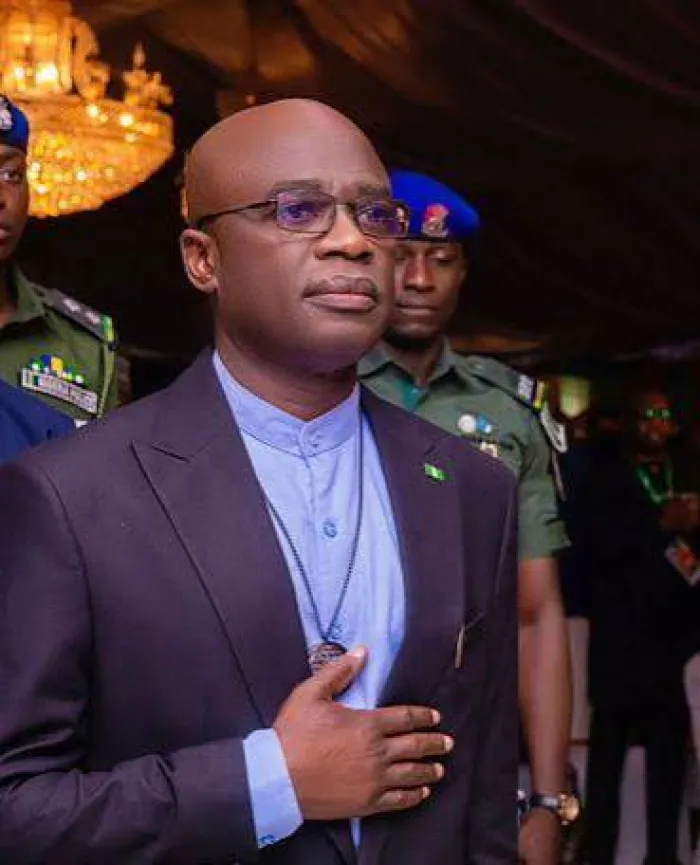
Over time, individuals are trained to specialise in particular fields of excellence, using education and professional development as tools for career advancement and service to society. For the Governor of Benue State, Rev. Fr. Hyacinth Alia, his unique blend of spiritual formation and training as a clinical psychologist has distinguished him in both religious and public life.
Governor Alia’s academic background in clinical psychology, combined with years of pastoral engagement, has shaped his approach to leadership. Observers note that he approaches governance with both empathy and analytical depth — “thinking with both heart and head.” His long-standing concern, they say, has been how to help individuals fulfil their potential, particularly those whose dreams have been hindered by lack of access to education and financial limitations.
Free Education Initiative
A major highlight of his administration is the declaration of free education for pupils in all government-owned public schools from Basic One to Basic Nine across the state. The policy was announced at the maiden Benue Basic Education Summit held at the College of Health Sciences, Moses Orshio Adasu University, Makurdi.
The initiative has been widely described by supporters as a bold step toward repositioning education as the bedrock of development and social mobility in the state. Analysts have likened the move to historic education reforms introduced in Nigeria’s Western Region during the tenure of the late Chief Obafemi Awolowo.
Governor Alia has repeatedly emphasised that development must go beyond infrastructure to include a reawakening of the intellectual and moral capacities of citizens. According to stakeholders, the administration views education as central to breaking cycles of poverty and equipping the younger generation for global competitiveness.
Leadership and Governance
Political commentators argue that Nigeria’s challenges over the years — from economic instability to governance gaps — have underscored the need for leaders with intellectual preparedness and clear policy direction. They note that effective governance requires strategic thinking, institutional strengthening and grassroots inclusion.
In Benue, supporters of the governor say his administration is focused on restructuring governance processes, strengthening accountability at the local government level and ensuring that federal allocations are utilised for grassroots development. Local government chairmen and councillors, it is gathered, are being urged to demonstrate transparency and measurable impact in their communities.
Calls for Unity Ahead of 2027
Amid the state’s history of political rivalries, some stakeholders are calling for unity and reconciliation among political actors. They argue that prolonged internal disputes have slowed progress and diverted attention from developmental priorities.
With the 2027 political season gradually approaching, segments of the political class and civil society groups are advocating issue-based politics rather than personality conflicts. Their position, they say, is that performance and developmental results should remain central in evaluating leadership.
For many residents, the free education policy and renewed emphasis on grassroots development represent a defining moment. Whether these reforms will translate into long-term socio-economic transformation remains to be seen, but the administration maintains that its focus is firmly on building a more inclusive and progressive Benue State.

Write a Comment