
Governor Alia Begins the Year with Prayer, Vision, and Renewed Commitment to a New Benue
Fely Mammah
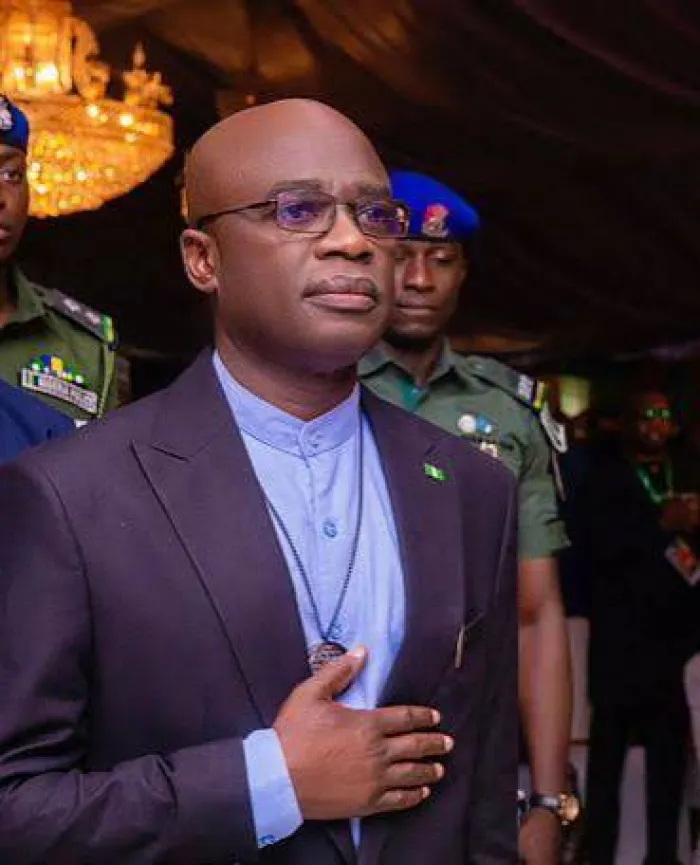
As people begin the year with resolutions for change, renewal, peace, and political continuity, the Governor of Benue State, Rev. Dr. Fr. Hyacinth Alia, has chosen to begin by seeking divine direction. Drawing strength from God and his spiritual fathers—whom he acknowledges as his rock and refuge—the Governor places his leadership journey firmly in the hands of faith.
In his daily devotions, Governor Alia prays for mercy, asking God not to mark his shortcomings but to receive him as a prodigal son in need of forgiveness and protection. He models his prayers after King David, echoing the plea of Psalm 61 for God to hear his cry and attend to his prayers. He reflects that even before his birth, he was destined to look up to God to lead him to a rock higher than himself and the entire Benue family.
The Governor expresses deep gratitude to his ancestors and spiritual heritage for offering shelter and strength to his people during times of homelessness, bloodshed, and unprovoked attacks. He recalls how Benue people found refuge and resilience even in moments of genocide and unprepared defense. He eulogizes them for bequeathing to Benue a heritage of courage, reverence for God, and endurance in the face of adversity.
Governor Alia reaffirms his covenant with God, symbolized by the Cross in the Benue State logo, assuring that the people of Benue will continue to look up to God for mercy and guidance. He maintains that without the God who lifted him “from grass to grace,” all human efforts would be in vain. He also appreciates the people of Benue for encouraging him to call upon God during moments of trial and uncertainty, especially when his human strength nearly failed him in his second year in office.
He acknowledges the painful history of Benue State, noting that no other state in Nigeria has witnessed such a scale of midnight, coordinated attacks and loss of lives. Yet, Benue has remained a reference point in Nigeria’s democratic journey—teaching future leaders that godfatherism and conditional loyalty cannot liberate people from bondage.
Drawing inspiration from biblical figures such as Moses, David, Joseph, Gideon, and Samson, Governor Alia cites Isaiah 54:15–17 to reaffirm his belief that although opposition may gather against a man of vision, no conspiracy approved outside God’s will can succeed. He insists that manipulative alliances formed to derail his mission will be exposed, and that no weapon fashioned against Benue State shall prosper.
On the subject of elections and second tenure, Governor Alia states that his true priority is the people—whom he calls the real game changers. He recalls that he was not discovered through political rallies but was drawn from the altar by the people to speak for them politically. He remains confident that those who have witnessed tangible projects and sincere leadership will not abandon him after his first tenure.
The Governor emphasizes that his mission is to build a new Benue State—one that will be remembered in history for completed projects and sustainable development. He highlights progress in electrification across the state, noting that Benue is steadily approaching standards comparable to oil-producing states.
Governor Alia asserts that supporting his administration means supporting a visionary leader with inbuilt charisma and reformative zeal. He notes that his duty in Government House is to remain vigilant and to advocate strongly for Benue people at both state and federal levels, ensuring they occupy positions rightfully due to them. Despite widespread disillusionment with political leadership in Nigeria, he stands out within the APC for delivering visible, fast-paced development, with several projects ready for commissioning.
He reiterates that security is a collective responsibility, not the sole duty of security agencies, and calls for information sharing and whistleblowing to safeguard communities. He also urges citizens to reframe their mindset—to dream big like Aliko Dangote and Femi Otedola, to draw lessons from leaders such as Thomas Sankara, Nelson Mandela, President Bola Ahmed Tinubu, and notable governors including George Akume, Gabriel Suswam, David Umahi, and Babatunde Raji Fashola.
Governor Alia calls on Benue youths to disengage from alcohol abuse and negative influences, and instead emulate individuals who inspire growth and achievement. He encourages citizens to see themselves as future CEOs, entrepreneurs, and employers of labor—not political thugs exploited for selfish ends. Though Benue is not an oil-producing state, he notes its abundance of solid minerals that can be transformed into valuable products.
Among his priorities this year, the Governor promises increased employment opportunities for graduates, including persons with disabilities, timely payment of salaries, and economic stability for families. He also appeals to families to reduce excessive bride prices, enabling young people to build honorable homes and multiply as encouraged in scripture.
Governor Alia concludes by reminding his people that life’s principles are rooted in scripture and ancestral wisdom. He calls for unity, education, peace, reconciliation, and forgiveness, acknowledging that all humans fall short and depend on God’s mercy.
“I cannot bite the fingers that fed me,” he declares, “especially when they are the very people God used to lift me beyond imagination.”

Write a Comment