
Benue Leaders Rally Behind Governor Alia as Unity Grows Ahead of Second-Term Push
By
Fely Mammah
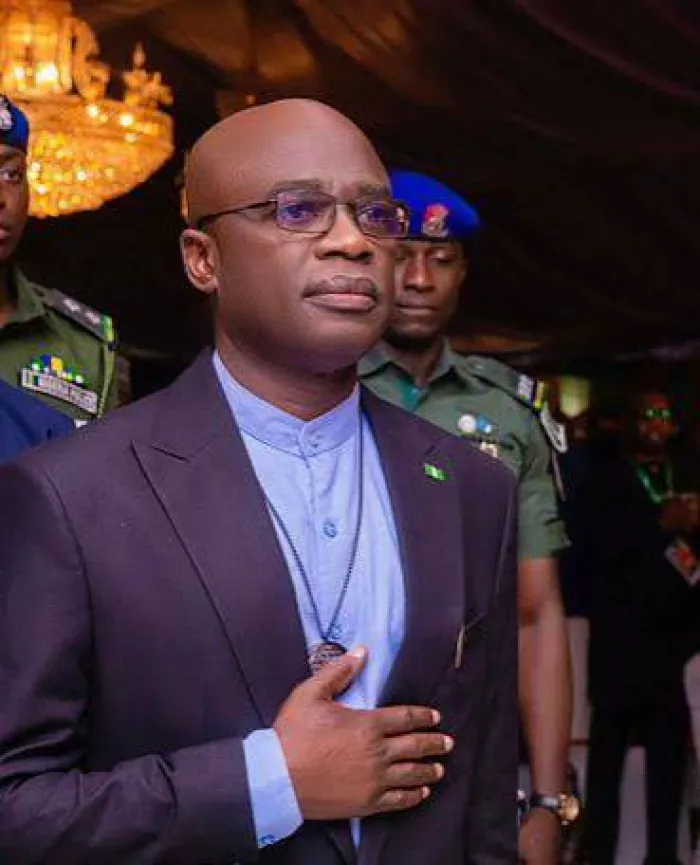
Political stakeholders and citizens in Benue State are increasingly closing ranks behind Governor Hyacinth Alia, with growing calls for unity, forgiveness and collective support for his administration amid ongoing security and development challenges in the state.
Observers note that recent political realignments and public statements by past leaders signal a renewed consensus around the governor’s leadership, particularly in the face of persistent attacks on rural communities and wider national insecurity. Many Benue indigenes argue that unity has become imperative, stressing that “two cannot walk together except they agree,” a principle they say applies to governance, security, development and survival.
Governor Alia, a Catholic priest-turned-politician, has been described by supporters as a deeply spiritual and forthright leader whose approach to governance is shaped by moral conviction and grassroots accountability. His emergence, they say, was driven by widespread support from rural communities who saw him as a departure from conventional politics and a leader unlikely to compromise his principles.
The growing unity became more visible following the recent defection of former governor Gabriel Suswam from the Peoples Democratic Party (PDP) to the All Progressives Congress (APC), where Governor Alia belongs. The move has been interpreted by many as a gesture of reconciliation and a strategic effort to foster cooperation for Benue’s development. Supporters recall that Governor Alia and many Benue leaders stood by Suswam during his eight-year tenure and view the latest alignment as a continuation of mutual support.
Former governor Samuel Ortom has also amplified calls for collective action, particularly on security. He has publicly condemned the ongoing killings in Benue, describing them as a planned genocide against indigenous farming communities rather than a failure of the current administration. Ortom and other leaders have argued that the scale of violence requires unity across political and traditional lines, noting that no single leader can secure the state alone.
Benue, largely agrarian and known for its hospitality, has been at the centre of clashes linked to land use, migration and armed attacks. Community leaders say their people’s peaceful nature has been misinterpreted as weakness, fueling displacement and loss of livelihoods. As a result, many stakeholders now insist that political differences must not be allowed to divide the state at a time when collective resolve is most needed.
Supporters of the governor point to visible development projects across the state as evidence of progress, arguing that such efforts should be encouraged rather than undermined by political rivalry. They also caution Governor Alia to remain vigilant about the motives of some elites around him, warning that personal or commercial interests could derail the broader mandate of development and security.
Calls have also been made to the media to report developments in Benue responsibly, with emphasis on verification and balance, to avoid misinformation that could inflame tensions or discourage progress.
With traditional rulers, past administrators and large sections of the population now publicly aligning behind Governor Alia, political analysts believe the atmosphere increasingly favours continuity. Many supporters argue that the consolidation of unity, combined with visible development efforts, has effectively opened the door for the governor’s second-term ambition.
As debates continue, one message resonates across Benue: that unity, rather than division, is seen as the most powerful tool for securing lives, protecting ancestral lands and delivering lasting development to the state.

Write a Comment